How LexiFi and OTCX connected two worlds of Structured Products technology
An interview with Jean-Marc Eber (CEO of LexiFi) and Nicolas Koechlin (CEO of OTCX)
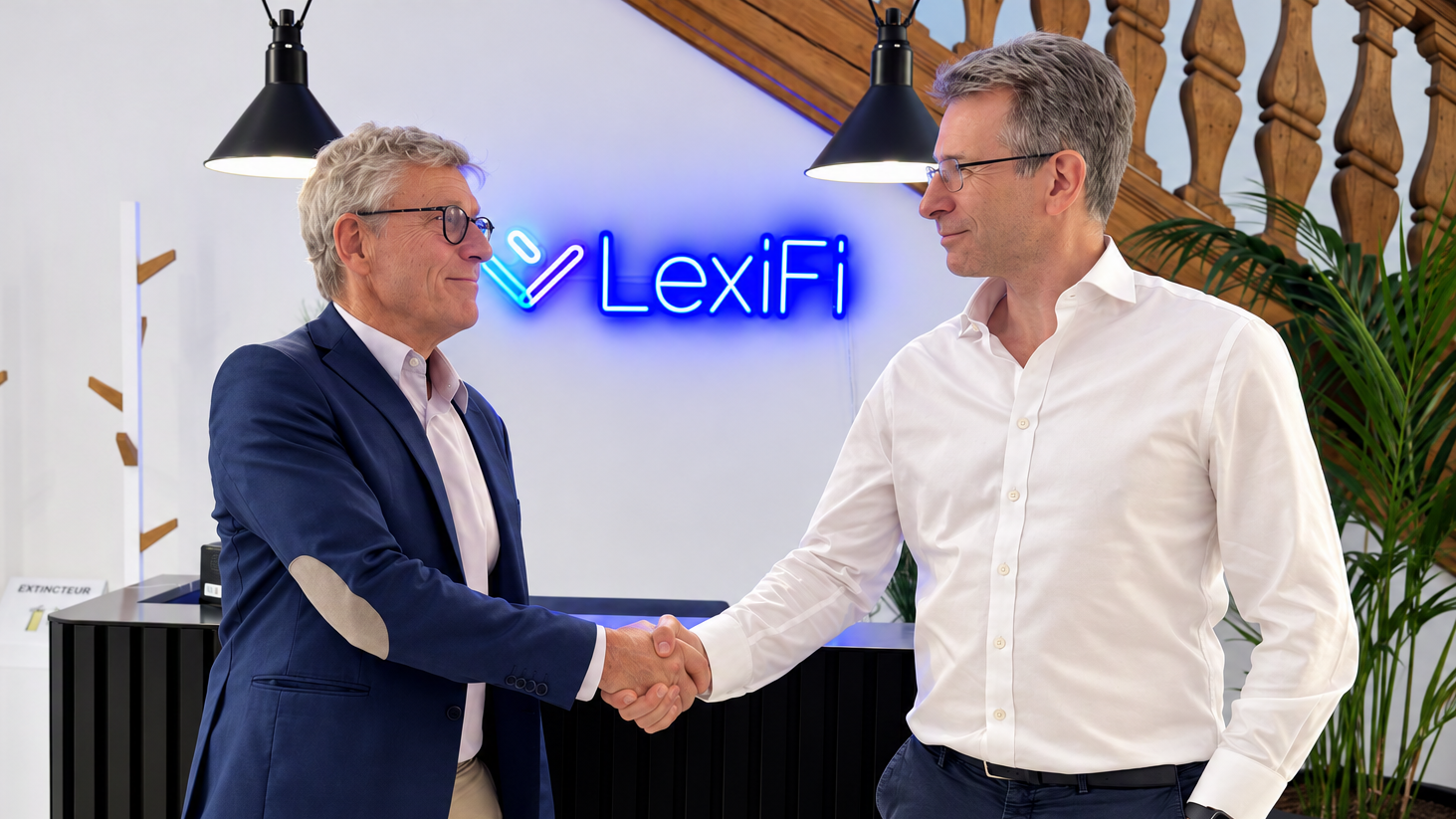
In financial technology, the decision to build or partner is ultimately a decision about where a firm can create the greatest value. For LexiFi and OTCX, the answer is to connect complementary expertise: specialist platforms working together to provide a streamlined structured products investment workflow.
|
OTCX OTCX is an independently owned, broker-neutral technology provider for institutional OTC markets, connecting wealth managers, asset managers and banks across price discovery, liquidity sourcing and execution for structured products and OTC derivatives. |
LexiFi LexiFi offers a comprehensive software platform for derivatives and structured products, built on a generic approach to financial contract modelling, with capabilities spanning structuring, valuation, quantitative analytics, risk analysis and lifecycle management. |
Within their shared buy-side workflows, the two platforms play complementary roles: OTCX connects clients to issuers for pre-trade pricing and execution, while LexiFi supports the subsequent booking, analysis and lifecycle management of their structured products. Together, the two platforms bridge pre-trade execution and post-trade management, without compromising their respective areas of expertise.
For end users, that means a direct route from price discovery and execution into portfolio management, with greater transparency across their structured products activity and fewer operational breaks. By making existing positions easier to understand and act on, the connected workflow highlights reinvestment opportunities earlier and increases trading activity.
We spoke with Jean-Marc Eber, CEO of LexiFi, and Nicolas Koechlin, CEO of OTCX, about the origins of their collaboration, the case for specialised technology over all-in-one platforms and how they see the future of structured products workflows.
The beginning
Can you take us back to the beginning? How did the relationship between LexiFi and OTCX first come about, and what client or market need brought you together?
Jean-Marc Eber, CEO of LexiFi: The most interesting partnerships are often those that respond to a genuine market need rather than a predefined strategy. Ours with OTCX is a good example.
The opportunity was to bring together two complementary areas of expertise: OTCX’s price discovery and execution capabilities, and LexiFi’s quantitative analytics and lifecycle management. The initial collaboration was driven by a shared client’s requirements, but we saw the potential to create something with much wider relevance.
That first integration laid the foundation for a broader partnership. As more institutions adopted it, we continued to invest in the collaboration, turning a specific business need into an established solution with long-term value for our clients.
Nicolas Koechlin, CEO of OTCX: What unites us is a shared ambition to help our buy-side clients reach their full potential. We already knew each other’s businesses and shared several clients.
Their message was clear: choosing specialist technology should not mean accepting a fragmented workflow.
We regard LexiFi as best-of-breed in post-trade lifecycle management, with a financial contract modelling approach that supports any structured product, advanced quantitative capabilities and an established client base. OTCX brought the corresponding expertise in price discovery and execution: connecting buy-side clients with their issuer networks and supporting complex, institution-specific trading workflows.
That client-led approach still shapes how we work: it is often a three-way discussion between the client, LexiFi and OTCX, with development centred on what the client is trying to achieve.
Why partner rather than build?
LexiFi supports structured products from structuring and valuation to risk analysis and lifecycle management. What led you to work with OTCX on RFQ and execution workflows rather than building an equivalent solution independently?
Jean-Marc Eber, LexiFi: The decision came down to recognising that we operate in two fundamentally different businesses, each requiring deep, specialised expertise.
At LexiFi, we’ve built our platform around a generic approach to financial contract modelling. This allows us to support any type of structured product, from valuation and quantitative risk analysis to lifecycle management, while continuously adapting to new structures and market requirements.
Developing and operating an RFQ and execution platform is an entirely different undertaking. It involves connectivity with multiple issuers, complex trading workflows and transaction reliability and traceability, alongside a different set of operational and regulatory requirements.
Of course, we could have developed these capabilities ourselves. But that would have required significant investment outside our core expertise, potentially diverting resources from what makes LexiFi distinctive.
Working with OTCX allows both companies to focus on their strengths while delivering a connected workflow to clients.
Rather than trying to do everything ourselves, we believe there's more value in each company building on what it does best.
OTCX has built its expertise around digital pricing and execution workflows. When considering how best to connect those workflows with lifecycle management, what made partnering with LexiFi the right approach, rather than developing those capabilities internally?
Nicolas Koechlin, OTCX: For OTCX, the decision was practical: our clients needed a stronger connection between execution and lifecycle management, not another provider attempting to recreate capabilities they already trusted. Our role is to keep investing in the point at which buy-side firms source liquidity, interact with multiple issuers and execute complex products. That requires specialist knowledge of institutional workflows, as well as the reliability, control and traceability expected around each transaction. LexiFi brings equivalent depth to what happens after execution.
The stronger proposition was therefore not to broaden either platform for its own sake, but to remove the break between two established parts of the client workflow.
That keeps each firm accountable for the area in which clients rely on it, while giving the client continuity across the process.
Beyond the first client
What did the first real-life implementation teach you, and why did you decide to keep investing in the partnership beyond that initial project?
Jean-Marc Eber, LexiFi: The first implementation taught us that the real challenge was not simply connecting two platforms, but translating a complex operational process into a reliable, repeatable workflow. That required close collaboration and a detailed understanding of structured products’ inherent complexities, whether a firm uses an all-in-one platform or interconnected solutions.
What really convinced us was what happened next. Today, six major private banks are using or implementing the LexiFi-OTCX integration. That showed us we had built something that could work well beyond the original client.
That market validation is why we have continued to invest. Both companies remain committed at the highest level to developing the integration as clients’ requirements evolve.
The technology has also moved beyond the original one-way transfer of product and execution information from OTCX into LexiFi. The two-way API creates scope to connect lifecycle events with later pricing and execution workflows.
Nicolas Koechlin, OTCX: The first implementation proved more than the technology; it showed that the partnership could deliver in practice. Strong results across our shared client base have since given both firms the confidence to recommend the other where it strengthens the client proposition.
It also showed that the API was a starting point, not an endpoint. The handoff from execution into lifecycle management revealed the potential for information to flow back towards the next investment decision.
That led to the two-way API, first presented to clients at our joint breakfast in June 2026. Reinvestment pricing illustrates its potential: information about an existing structured note and its lifecycle events could help inform pricing for what comes next.
Lifecycle management need not sit at the end of a linear process; it can contribute to the beginning of the next one.

What clients gain
What do you see as the key advantages of connecting specialised technologies rather than relying on an all-in-one platform? Can you illustrate how this approach benefits clients through a practical example from the LexiFi-OTCX integration?
Jean-Marc Eber, LexiFi: The first advantage is freedom of choice. Clients can select the technologies that best meet their needs without sacrificing an integrated workflow.
An all-in-one platform can appear simpler, but it may also create dependency on a single provider across several distinct disciplines. Connecting specialist platforms gives institutions an alternative: depth of capability without concentrating every decision in one technology stack.
That flexibility matters in a global market, where firms have different regional footprints, requirements and existing systems. It allows clients to adapt their technology environment while retaining the providers they consider strongest in each area.
The second advantage is the best-of-breed approach. Each discipline, from valuation and quantitative analytics to execution workflows and lifecycle management, requires deep expertise and continuous investment. I think clients benefit more when providers focus on what they do best, rather than trying to cover everything. That best-of-breed model also allows the platforms to evolve independently. LexiFi can continue advancing its pricing models, risk analytics and lifecycle capabilities on its own development cycle, while the integration preserves continuity with OTCX.
The challenge is interoperability: giving clients genuine choice requires the connection between systems to be as carefully developed as the capabilities within them.
Nicolas Koechlin, OTCX: Specialisation should not mean fragmentation. Clients may understandably be cautious about depending on two providers, so the partnership has to work operationally as well as technically.
That is why we have joint working groups, live support channels, collaboration workshops and senior management oversight across shared clients. These arrangements give the client a coordinated service rather than two providers passing responsibility between them.
The practical benefit is continuity. Product and execution information can move from OTCX into LexiFi for ongoing management rather than being recreated by the client. That reduces duplication at a critical point in the workflow and allows the client to preserve the value of specialist technology without carrying the operational burden of connecting it alone.
Keeping pace with the market
As structured products workflows evolve, what are the main technological and operational challenges facing the industry, and how can collaboration between specialised providers help address them?
Jean-Marc Eber, LexiFi: One of the main challenges is adapting to evolving market requirements while maintaining the reliability and robustness of the underlying technology.
On the quantitative side, financial institutions must accommodate new product structures, evolving pricing methodologies, increasingly sophisticated risk models and analytical requirements, including those driven by regulatory developments.
At LexiFi, this adaptability is fundamental to our approach. Our generic financial contract modelling technology allows us to support any type of structured product and rapidly introduce new pricing methodologies, risk analyses and quantitative capabilities without having to develop dedicated functionality for each new payoff.
At the same time, the industry faces significant operational challenges around workflow automation, connectivity and the reliable exchange of information between different systems and market participants.
I think this is where collaboration really matters. Quantitative analytics, lifecycle management and execution workflows are distinct disciplines, but clients experience them as one process.
We need to make sure our technologies can evolve independently while continuing to work seamlessly together.
Nicolas Koechlin, OTCX: Consistency cannot come at the expense of the detail that makes these products work in different markets. The US, Europe and Asia have distinct conventions and product complexities. Both OTCX and LexiFi operate globally, so we must accommodate those differences rather than assume that a single regional approach can be applied everywhere.
Standardisation is therefore not about making every structured product the same. It is ensuring that its terms can be represented and understood consistently as information moves between systems, while preserving the details relevant to each market.
The challenge is not simply to pass data between systems. The information has to retain the product detail, market convention and execution context needed for the next part of the workflow. That is particularly important as products and regional practices evolve: consistency has to be achieved without stripping out the characteristics that make a transaction workable in a given market.
Looking ahead
Looking ahead, how do you see structured products technology evolving, and what role do you think partnerships between specialised providers will play in shaping its future? How does this translate into opportunities for the LexiFi-OTCX collaboration?
Jean-Marc Eber, LexiFi: I believe the next big step for structured products technology will be even greater interoperability and automation.
Individual workflows have become more digital, but seamless communication between systems remains difficult. More comprehensive standards are needed to represent and exchange complex product information consistently throughout its lifecycle.
Greater interoperability would support more straight-through processing, reduce manual intervention and allow financial institutions to focus on higher-value activities such as advising clients and developing investment solutions.
I see partnerships between specialist providers as a key part of that evolution. Each company should be able to keep innovating in its own field while making it easier for clients to work across different systems. That’s the direction we want to keep moving in with OTCX.
Nicolas Koechlin, OTCX: Interoperability creates the foundation, but the industry’s ambitions for AI and analytics depend on the quality and availability of the underlying data. As workflows become more electronic, information captured across pricing, execution and lifecycle management can become more useful to issuers and private banks.
For OTCX and LexiFi, the opportunity is to deepen the exchange between our platforms and support meaningful analysis across the product’s life. The information does not need to reside in one system; it needs to be available and usable across the systems clients rely on.
The two-way API is a step in that direction. By connecting execution and lifecycle information, clients can build a more complete view of the decisions made across the product’s life and a stronger foundation for future analytics. The longer-term ambition is not simply to move more data.
It is to turn the information generated through the workflow into intelligence that supports the next decision.